
What Fabric is Best? Your Comprehensive Guide to Matching T-Shirt Material with Print Technique
Not all t-shirts are created equal and in Florida's heat, the right fabric choice makes all the difference.
☀️ Florida-focused tips & advice. 🎨 Printing techniques explained simply. 👕 Cotton · Poly · Blends compared
You've got a brilliant design, a passionate team, or an upcoming event and now comes the one question that can make or break your custom t-shirts: which fabric should you choose?
Here in Florida, where the sun blazes, humidity is relentless, and casual wear is practically a lifestyle, the fabric you pick isn't just about comfort — it directly determines how well your print looks, how long it lasts, and how satisfied your customers or crew will be wearing it.
We've helped hundreds of Florida businesses, teams, and event organisers navigate exactly this question. This guide breaks it all down in plain English: ; no confusing technical jargon, just practical, honest advice to help you make the smartest choice for your next custom t-shirt order.
Why Does Fabric Choice Matter So Much?
It's tempting to focus only on your design and assume any blank t-shirt will do the job. But here's the truth: the fabric is the canvas, and different canvases respond very differently to different printing techniques. Choosing the wrong pairing can result in colours that fade, prints that crack, or designs that simply don't pop the way you imagined.
Beyond the print itself, fabric choice affects:
How comfortable the shirt feels to wear all day in Florida's climate
How the garment holds up after repeated washing
The vibrancy and detail of your printed design
The overall perceived quality of your brand or event merch
Your budget , some fabric-print combinations cost more than others
Simply put, a great design on the wrong fabric is a wasted opportunity. Let's make sure that doesn't happen to you.
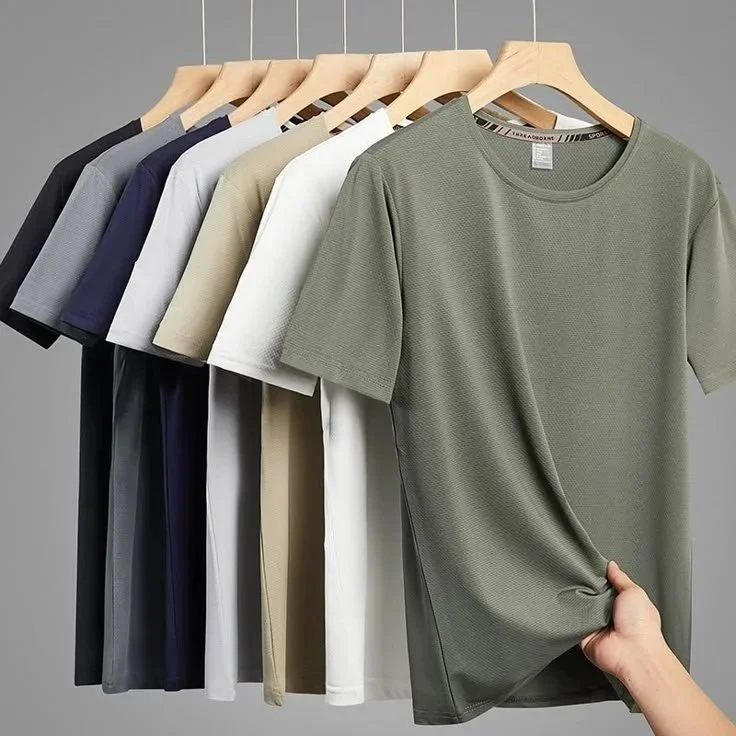
The Three Main Fabrics You'll Encounter
Cotton — The Crowd Favourite
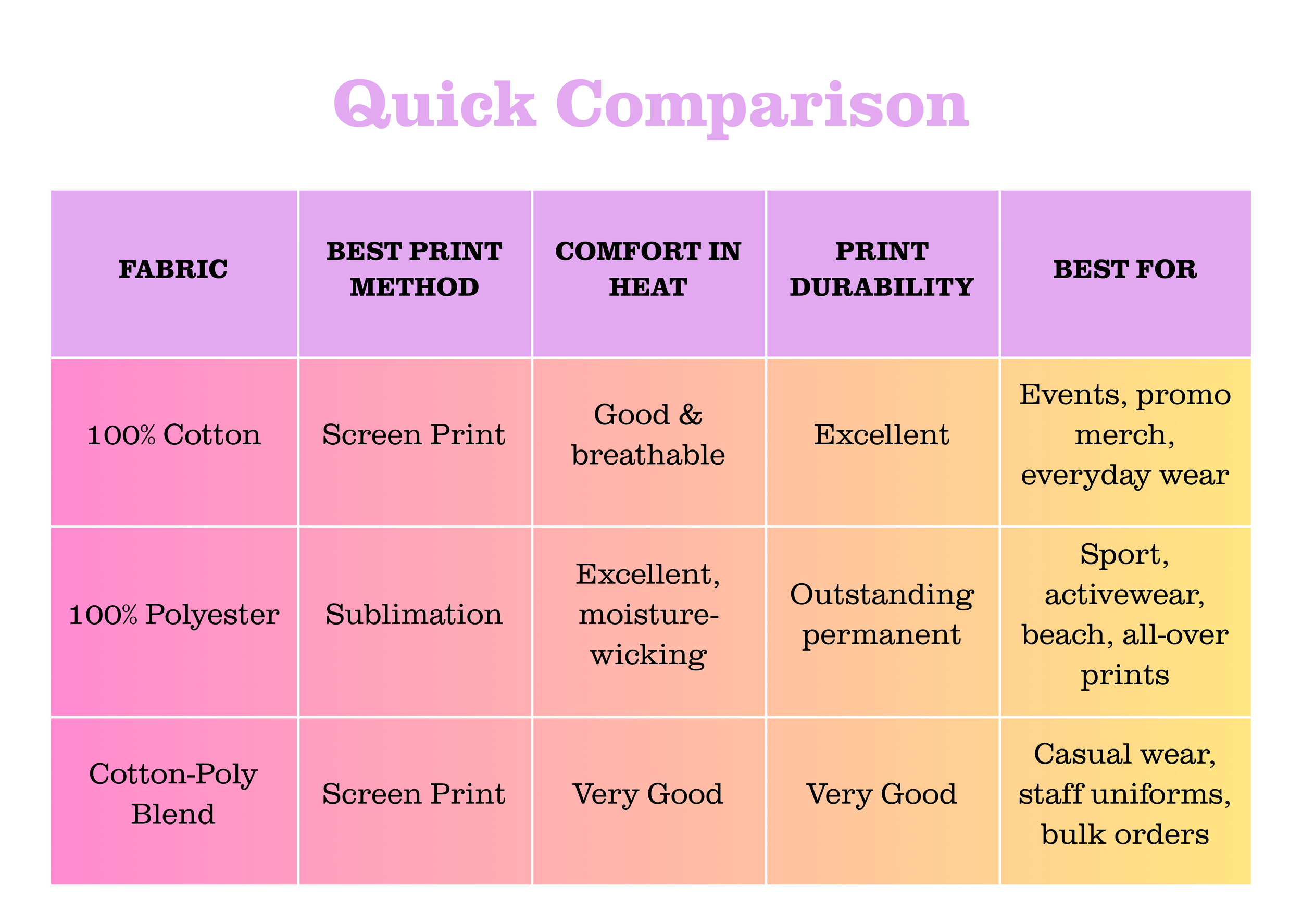
When most people picture a classic t-shirt, they're imagining 100% cotton. It's breathable, soft against the skin, and has a natural texture that many people simply prefer. For Florida residents who are spending time outdoors or at casual events, cotton feels comfortable and familiar.
What makes cotton great for printing:
Absorbs ink exceptionally well, producing rich, bold colours in screen printing
Holds detailed designs cleanly without bleeding
Provides a matte, natural look that suits vintage or bold graphic styles
Widely available in a range of weights, from lightweight summer tees to heavier premium styles
Florida tip: Opt for a lighter-weight cotton (150–160 gsm) for outdoor summer events. It breathes better in the heat and humidity without sacrificing print quality.
Polyester — The Performance Champion
Polyester has come a long way from its scratchy, stiff reputation of the 1970s. Modern polyester fabrics are smooth, lightweight, and incredibly practical — especially for sportswear, activewear, and team uniforms. If your customers are running 5Ks on the beach, playing weekend sport, or attending outdoor festivals in July, polyester is going to keep them far more comfortable than cotton.
What makes polyester stand out:
Excellent moisture-wicking properties — pulls sweat away from the body
Lightweight and quick-drying, ideal for Florida's humid climate
Resists shrinking and maintains its shape wash after wash
The perfect fabric for sublimation printing (more on that shortly)
Important to know: Polyester doesn't work well with traditional screen printing inks — the heat required can cause "dye migration," where the fabric's colour bleeds into the ink. This is why sublimation printing was developed specifically for poly fabrics.
Cotton-Poly Blend — The Versatile All-Rounder
Can't decide between cotton and polyester? You don't have to. A 50/50 or 60/40 cotton-polyester blend gives you the soft handfeel of cotton paired with the durability and slight moisture-wicking of polyester. These shirts are popular for everyday casual wear, staff uniforms, and merchandise where versatility matters.
Why blends are worth considering:
Softer and more lightweight than 100% cotton of similar weight
Less prone to shrinking than pure cotton
Works reasonably well with screen printing
Often the most cost-effective option for bulk orders
The trade-off: Blends don't deliver the same print vibrancy as 100% cotton with screen printing, and they're not suitable for full-colour sublimation printing. They're a solid, practical middle ground — but if your design demands the absolute best in print quality, a pure fabric is usually preferable.
Common Questions — Answered
Can I use sublimation on a cotton shirt?
Unfortunately, no. Sublimation dyes only bond with synthetic fibres (polyester). On cotton, the dye has nothing to bond to and will either wash out immediately or not transfer at all. Always use 100% white or light polyester for sublimation prints.
Will screen printing work on polyester?
It's technically possible, but not recommended. Standard plastisol screen printing inks require high heat to cure, and polyester fabric is prone to "dye migration" — where the synthetic dye in the fabric bleeds up into the printed ink layer, muddying your colours. Specialised low-cure inks exist for poly, but the results are rarely as crisp as cotton screen prints.
I want full-colour, photo-quality prints. What should I choose?
Go with sublimation on white 100% polyester. It's the only method that handles unlimited colours, gradients, and photographic images with complete accuracy. Screen printing is limited to a set number of spot colours per design.
Which fabric is best for bulk event t-shirts on a budget?
A 50/50 cotton-poly blend with screen printing tends to be the most cost-effective option for large runs. The shirts feel good, print well, and can be produced affordably at volume. If you're printing 50+ shirts with a simple 1–3 colour design, this combination is hard to beat on price.
How do I care for sublimation-printed shirts?
Sublimation prints are incredibly low-maintenance. Wash inside out in cold water, avoid bleach, and tumble dry on low. Because the dye is embedded in the fabric fibres, you'll never have to worry about peeling or cracking — it simply doesn't happen.
Ready to Print Something Amazing?
Now that you know exactly which fabric and print method suits your needs, it's time to bring your design to life with Imperial Imprinting — Florida's trusted custom apparel experts. Browse our catalogue, explore our services, or get in touch for a personalised quote today.
